
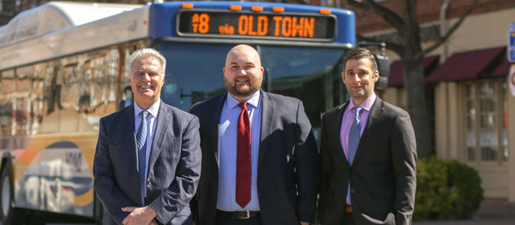

At first glance, a bus crash may seem like just another traffic accident. But in Virginia, bus accident cases operate under very different rules than typical car crashes. The parties involved, the deadlines that apply, and even how fault is determined can change dramatically depending on who owns or operates the bus.
At Curcio Law, we have handled bus-related injury cases involving pedestrians struck by a bus, vehicles rear-ended by buses, and equipment malfunctions. Over time, one thing becomes clear: bus accident claims follow different rules than standard auto cases, and recognizing those differences early is critical to protecting your rights.
Public Vehicles Change the Rules
Many buses in Virginia are owned or operated by government entities or quasi-government agencies. This can include regional transit authorities, local municipal systems, or contractors operating on a government’s behalf.
We go more in depth in our Why It Matters if the Bus Was Public or Private? article but essentially when a public entity is involved, special rules often apply. These rules may limit how claims are brought, shorten deadlines, or restrict who can be sued and for how much. These special rules frequently include a notice requirement, which essentially means there are specific rules on how and when you must notify the governmental agency that you have been injured by a bus that is publicly owned. It is especially important that you contact an attorney as soon as possible to ensure that your claim complies with the applicable notice requirements. Some entities also assert forms of immunity that never come into play in ordinary car accident cases.
Evidence Is Not in Your Control
In car accidents, evidence is typically gathered by police and maintained independently. Bus accidents are different. Video footage, maintenance records, internal incident reports, and driver histories are often controlled by the bus operator.
That evidence may be overwritten, discarded, or never voluntarily produced unless steps are taken to preserve it. This is especially critical in cases involving sudden stops, passenger falls, or equipment failures like ramps or lifts, where there may be no external witnesses. An experienced attorney can take early steps to formally preserve this evidence before it is lost or overwritten. This may involve issuing preservation or spoliation notices, identifying all potential sources of video and electronic data, and ensuring that key records are requested and tracked before routine retention policies erase them.
Liability Is Often More Complex
Bus accident claims frequently involve more than one responsible party. Depending on the circumstances, responsibility may fall on the driver, the agency or company operating the bus, a maintenance contractor, or even an equipment manufacturer.
Identifying the correct parties is not optional. Naming the wrong defendant or missing the proper one can derail an otherwise valid claim.
Injuries Tend to Be More Severe
There’s a reason the saying “I feel like I’ve been hit by a bus,” exists when everything hurts. The size and weight of a bus dramatically change the nature of injuries when something goes wrong. Even at speeds that might seem moderate, the force involved in a bus collision can cause catastrophic harm.
In one case we handled, a gentleman was driving on Interstate 66 during rush hour when his vehicle was rear ended by a bus. The impact was so severe that it broke the seat belt mechanism, throwing him into the back seat. He lost consciousness at the scene and sustained a traumatic brain injury. Watch his testimonial here.
In another case, a woman was lawfully crossing in a crosswalk when a bus rolled over her foot. What began as a localized crush injury became something far more serious. Surgical complications followed, and the injury permanently altered her mobility and quality of life. More than twenty years later, she continues to live with the effects of that moment.
These cases underscore a reality we see repeatedly. Bus accidents often cause injuries that are not only severe at the outset, but also long lasting. The full impact may not be clear for months or even years, which is why early assumptions about recovery can be dangerously misleading.
Quick Settlements Carry Real Risk
Bus operators and their insurers often move quickly to contact the injured party because early settlements benefit them, not you. These offers may come before the full extent of injuries is known or before all available evidence has been uncovered. Once a settlement is accepted, it is typically final, even if complications arise later.
This is especially true in bus cases, where long-term medical needs or permanent limitations are more common.
This reality is why injured people are often advised not to accept or sign anything before speaking with legal counsel. Bus operators and public agencies are represented by lawyers from the start, whose role is to protect their interests. Having your own representation helps ensure your health, recovery, and future needs are given equal protection. While not a bus accident, here is a real-life example of a $297,000 difference not settling early made.
Assuming that a public agency or large transit authority will simply “do the right thing” can be risky. These cases are governed by rules, deadlines, and defenses that exist regardless of intent, and once an agreement is signed, those safeguards no longer exist for the injured person.
Why This Matters
A bus injury claim can be undervalued or lost when it is treated like a routine car accident. Bus accident cases are governed by different rules and backed by experienced defense teams. Understanding those differences early can protect your legal rights. At Curcio Law, we have experience handling complex bus accident and pedestrian cases across Virginia and Washington DC. If you have questions about your options after a bus-related injury, we are here to help you understand them with a free consultation.